How Anti-ICE Sentiment Is Shaking Up Sheriff Races
Incumbent sheriffs are facing challengers who want to cancel ICE contracts
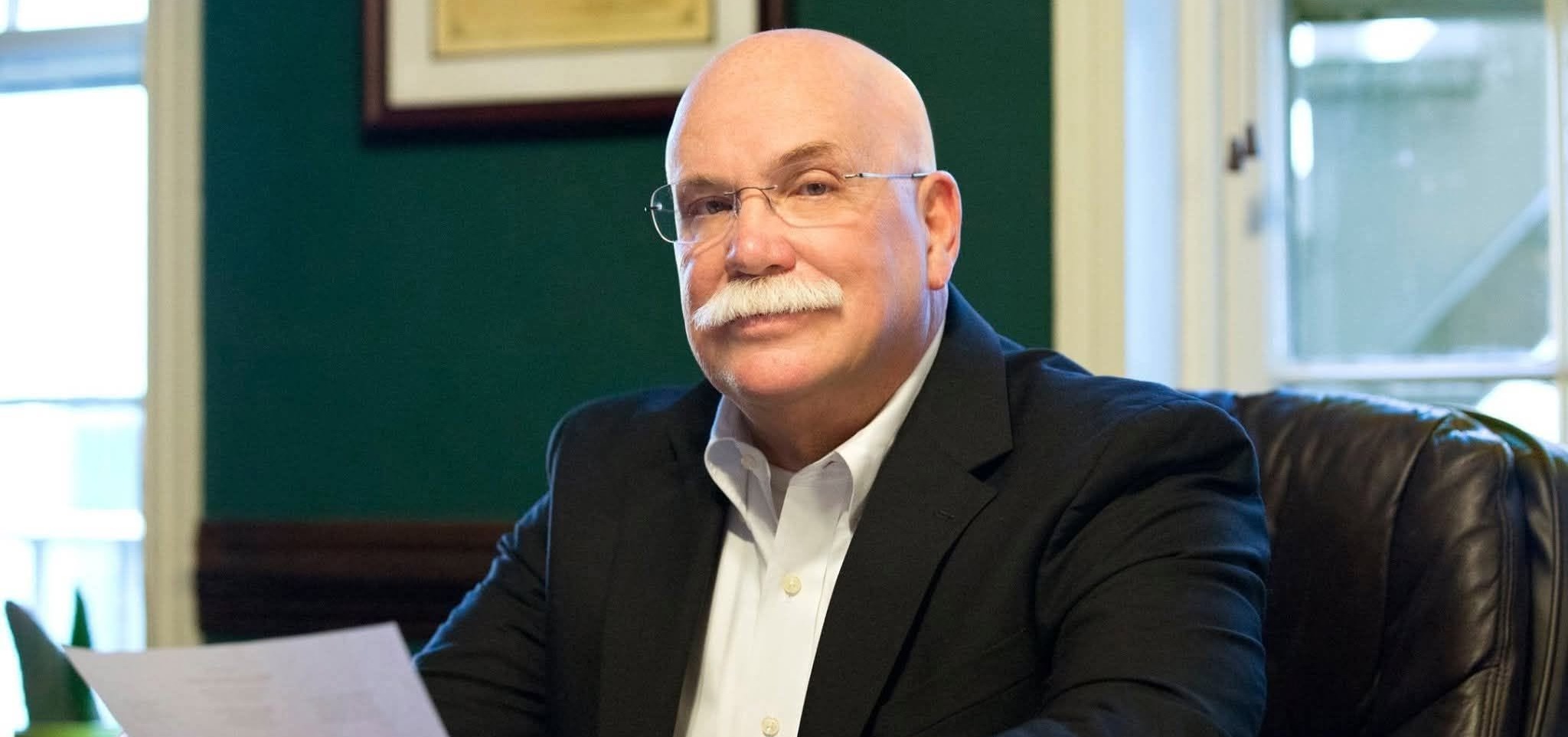

In Frederick County, Maryland, just one hour from Washington, D.C., the sheriff’s election is being defined by immigration. Republican Sheriff Chuck Jenkins is facing a challenge from a Democrat Karl Bickel, who thinks the way the department is handling immigrants is detrimental to the county. Jenkins has been the sheriff in the county since 2006 and has become notorious in Frederick, which has seen an increase in the Latino population as working class families move further away from cities in search of affordability.
Jenkins has been a Donald Trump supporter since the beginning. He told NPR in January 2025 that his department would be working hand-in-hand with the Trump administration. “Now, ICE is going to do their job. They're going to come into their communities all across the country,” he said. “They're going to target criminals, criminal gangs, cartels, public safety threats.” He’d already been accused of pursuing a stringent anti-immigrant agenda before Trump came back to power.
Bickel is looking to do a complete 180. He wants to serve as a check on ICE agents. “A lot of what ICE is doing, if a deputy did it they’d be fired or arrested,” he told Bolts Magazine last month. “The use of force, the utilization of chemical agents, things like that. It’s just not right.”
Sheriff elections are normally quiet affairs, as most candidates run unopposed or against nominal opposition. But with rising anti-ICE sentiment, some sheriff candidates now have the chance to capitalize on that backlash and make the case for why local police departments have no business partnering with the federal government in these cases.
Local police departments increasingly got involved in federal immigration enforcement because the only way to deport millions of immigrants from the United States was with a massive amount of resources, including money, space to hold people waiting to be flown out, and hundreds of law enforcement officials.
The Trump administration, knowing that their promises to conduct mass deportations hinged on cooperating local law enforcement, began pushing 287(g) programs, the section of federal law that allows for police departments across the country to partner with federal immigration agents. And agreement or not, the federal government is still able to conduct enforcement within a state.
Republican governors jumped at the chance to aid the Trump agenda. Many even quickly signed laws that would require sheriffs to work with Immigration and Customs Enforcement agents in different ways.
In some blue states, however, the backlash to the Trump administration immigration agenda was swift. The Maryland legislature is dominated by Democrats, and lawmakers quickly passed a law to ban counties from entering into 287(g) agreements with ICE. It was popular among the Democratic constituents, but the eight Republican sheriffs across the state who championed the agreements responded to the changes with a lawsuit.
But overall, the number of agreements has exploded. At the end of 2024, there 140 of them in place, according to the Urban Institute. By July 2026, there were 1,730. As a result, Americans started seeing the program's effect in real life. Police officers, untrained in immigration enforcement, began sweeping up people in unprecedented numbers, resorting to racial profiling in many cases.
A small town police officer earned the ire of his community after handing over 10% of the population to ICE. Men guilty of nothing more than driving through West Virginia while appearing to be Latino were held for days. Immigration arrests tied to 287(g) programs have skyrocketed.
Republican Sheriff Terry Johnson of Alamance County, North Carolina, only terminated his agreement with ICE last November because, according to him, it was costing too much money to hold detainees and the overcrowding conditions were dangerous for staff and inmates alike. But he still supports ICE and all they’re doing across the country and in his state, saying they’re only targeting criminals.
Now, he’s being challenged by Shannon Long, an independent who says he wouldn’t interfere with any ICE operations in the state, but said he doesn’t support turning local law enforcement into federal immigration agents or think that immigrants play an outsized role in crime rates.
“Official crime data does not show that undocumented immigrants are a major source of violent crime in Alamance County,” he told Alamance News in a candidate survey. “The U.S. Department of Justice and civil rights organizations state that empirical evidence linking the local immigrant community to elevated crime rates is lacking.”
The same story is playing out in Wisconsin, where there are currently 20 287(g) agreements in place.
In Sauk County, Democrat Ryan Jesberger says he’ll end the agreement on day one, taking issue with the legality of the whole program and how much it strains the resources of the police department. “Our deputies are busy enough doing things for the citizens of Sauk County,” he told Wisconsin Watch and Bolt Magazine. “So, adding roles and responsibilities and, frankly, liability on top of all that is a concern of mine.”
His Republican opponent Matt Burch doesn’t want to expand the program any further, but has no plans to end it. That could end up being a political mistake, because it’s not just formal programs that the public has soured on, but the agency itself. Even welcoming ICE with open arms could be a problem.
A Pew Research Center survey conducted this month found that 56% of Americans have an unfavorable view of the agency, up from 49% last year. The vast majority of Democrats view ICE negatively and even the number of Republican respondents who have an unfavorable view of ICE has inched upward during Trump’s drastic deportation push.