How A Georgia Public Service Commissioner Wants to Tackle Affordability
Dr. Alicia Johnson discussed affordability, her historic election to state office, and more with The Caucus
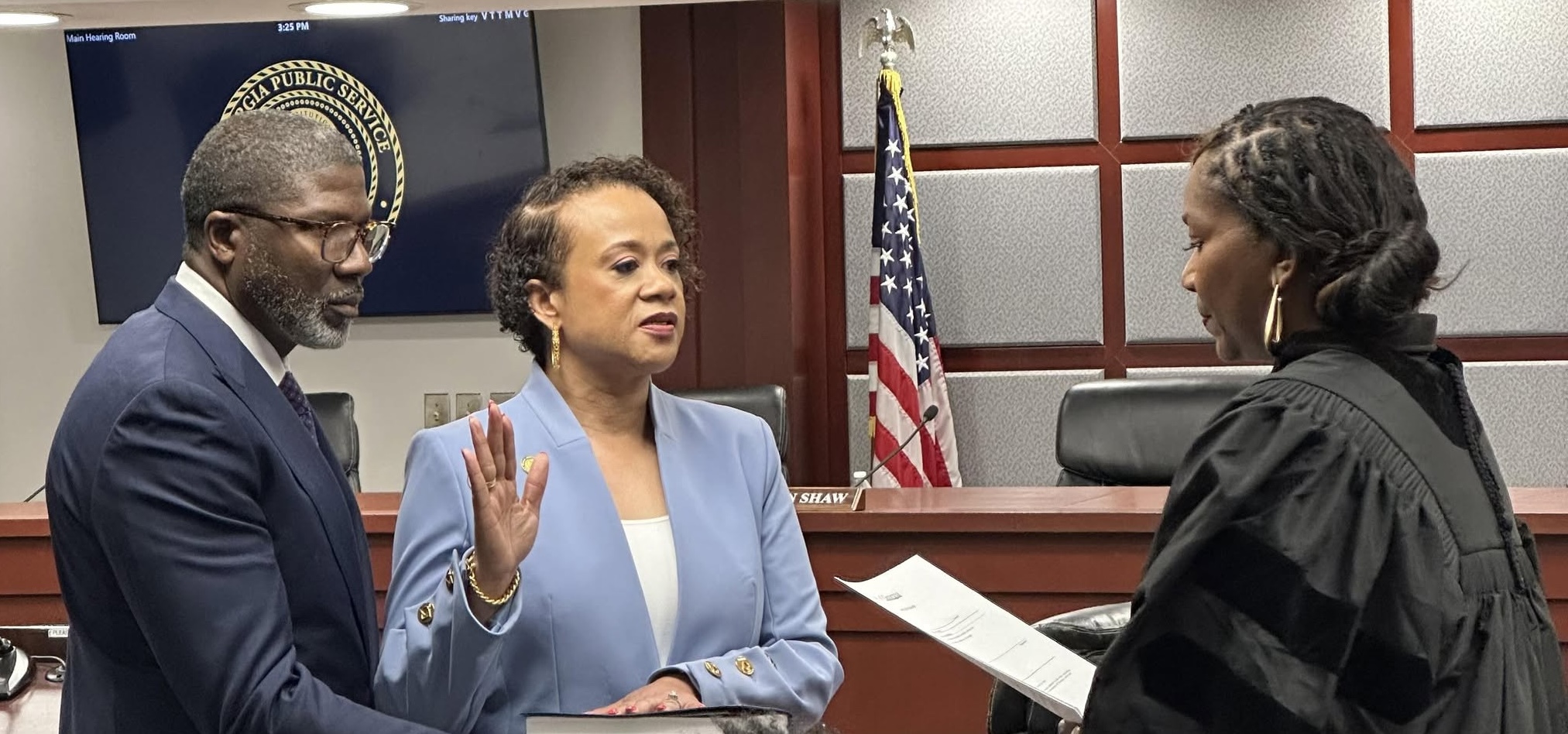

Dr. Alicia Johnson knows about power in Georgia. After voters sent her to the state’s Public Service Commission last year, she’s dug into the nitty-gritty of Georgia’s power scene, focusing on electric, natural gas, and other utilities — the quiet behind-the-scenes infrastructure that no one notices when it’s working well, but spots immediately when it doesn’t.
Her work puts her on the frontlines of decision-making that affect people’s pocketbooks. It’s a responsibility she doesn’t take lightly, but that she worries politicians across the country may be doing this election cycle.
“I would like to raise the danger of making affordability a hashtag or something we’re just talking about as a political talking point, versus really understanding what’s happening in our communities,” Johnson said.
Johnson sits on the Georgia Public Service Commission as a representative for District 2, which covers over 2 million people across 38 counties in northeastern and eastern Georgia. Last year, she made history as the first Black woman to be elected to a statewide executive office in the state’s over 230-year history.
“I was the first, but I don’t want to ever be the last,” Johnson said. “And being the first, there’s that historical significance. But the bottom line is, it’s really more of an indictment on our history than it is about breaking any ceiling, right? The fact that I'm the first Black woman on a commission that's been in existence for 100 years is an indictment on our state.”
The Georgia Public Service Commission regulates public utilities across the state, setting rates and enforcing regulations through judicial proceedings. According to its website, the agency’s five commissioners “make decisions that affect the lives of every Georgian each time a landline telephone is picked up, a light is turned on or a gas burner is used.”
Johnson is very aware of how far the decisions she and other commissioners make in their boardroom in Atlanta can go. “I don’t take it lightly to sit in those seats,” she said.
She describes her work as being at the nexus of both economic and community development and emphasized their role in setting the state’s energy agenda, which has become more contentious than ever in the age of data centers.
“Wwe have a state where over half of our population is asset-limited, income-constrained, working families,” Johnson said. Yet households often spend 10 to 20 percent of their annual income to meet their energy needs.
“People are literally choosing between their prescription and their utility bill,” she said. It’s something she repeated often on the campaign trail, and now finds herself saying in public meetings. It reflects a reality she’s grown to know well in Georgia, one that informed her campaign. She ran on a platform of increasing transparency in government, championing consumer protections, and involving more communities in leadership decisions, particularly in rural areas.
While affordability has emerged as the defining issue of this election cycle, Johnson worries that other legislators may be using the word without understanding the full crisis it represents.
“This is a big fear of mine,” Johnson said. “I think about this often, particularly as I engage with other legislators or policymakers.” She feels like their awareness of “downward pressures” on communities, particularly in rural areas, is not fully realized. One example she brought up was a lack of understanding of how some of the cuts in Trump’s so-called Big Beautiful Bill, which passed last year, will impact Georgia when they go into effect in 2027.
The legislation is bringing a “tsunami of issues” into 2027 with its cuts to Medicaid, SNAP, and low-cost energy assistance programs, Johnson said.
“We are in a looming crisis … It is a new fiscal reality that families and states are going to feel in ways that they have not before, because the government has snatched all of the safety net from under us, and the states have been required to fill in those gaps,” Johnson said.
In Georgia, she wants to help fill those gaps on the commission. She’s hopeful that she and her colleagues will be able to deliver initiatives that reduce utilities costs in Georgia to residents, including by implementing programs such as community solar and develop guidelines for data center development in the state that protect communities from incidental energy usage costs.
Though she’s hopeful more Democrats will get elected to the commission, she also noted her commitment to working with her colleagues to address rising energy costs in the state.
“I don’t have a problem crossing the aisle when we are putting people at the center of our policy making,” Johnson said. “I’m eager to work with whoever is eager to solve this issue.”