Sherrod Brown Seeks a Return to the Senate
The political environment is similar to when he first won a senate seat in 2006
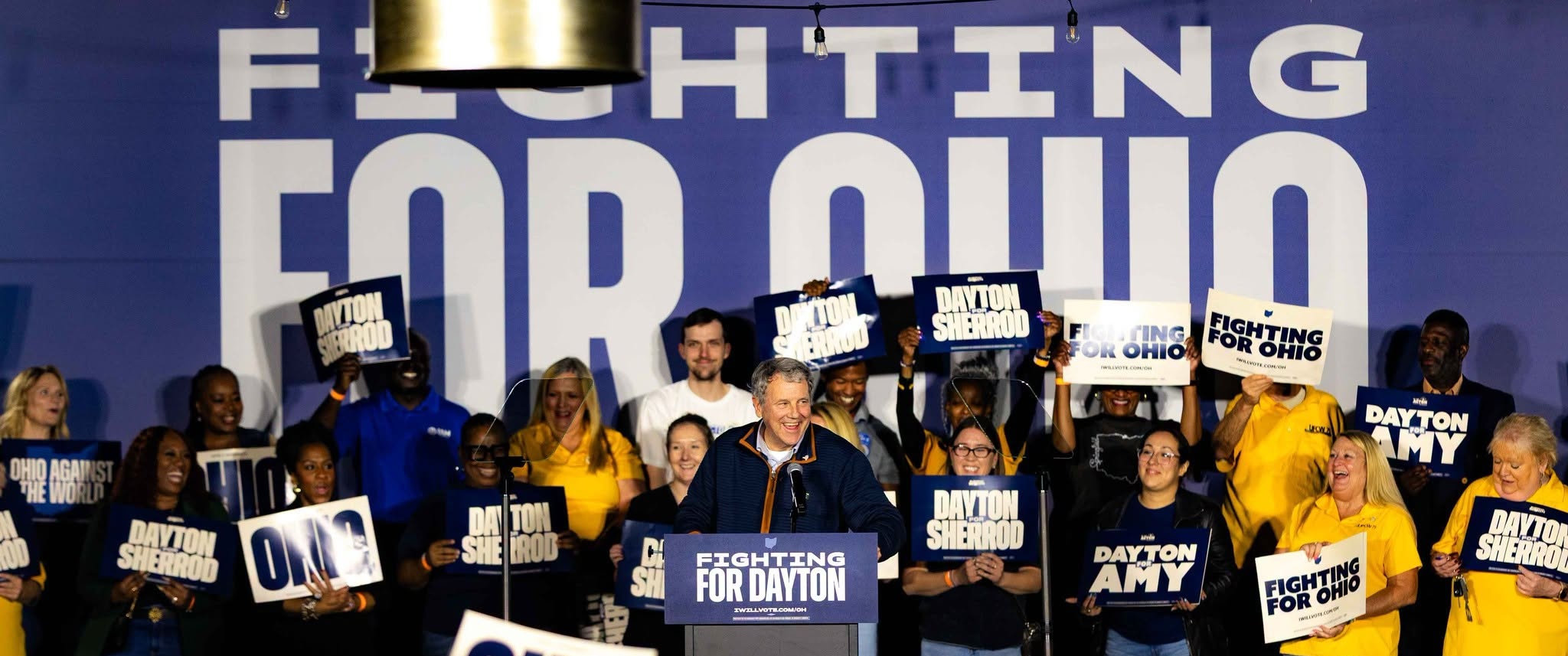

During the red wave of 2024, longtime Ohio Senator Sherrod Brown lost his seat to Trump-endorsed Republican Bernie Moreno. The 18-year incumbent raised more money than the former car salesman, and Moreno made some serious gaffes on the campaign trail, but still beat Brown by four points.
But in a weird twist of politics, Brown is running for Senate again two years later. He’s challenging Sen. Jon Husted, who was appointed to fill the Senate seat JD Vance vacated to become vice president. It puts Brown in a unique position: he’s an experienced politician with serious progressive bona fides hoping the political tide has turned enough in the past two years that Ohio voters want a change and will send him back to Washington.
“This system is more rigged than it's ever been,” Brown told an audience of Black community leaders and lawmakers at an October campaign event in Garfield Heights, near Cleveland. “You can't have a functioning economy when the rich are making 300 times more. And all the people creating the wealth are making their wealth possible.”
Brown finds himself in a situation that was almost unthinkable after 2024: Ohio is the sleeper swing state this election cycle, and his race might help Democrats take control of the Senate.
The 2026 campaign echoes Brown’s first run for Senate in 2006, when he ran on a populist platform in the key swing state against unpopular then-GOP Sen. Mike DeWine. This year he’s running against now Governor DeWine’s former lieutenant governor in Husted, but the issues are eerily similar to 2006: The cost of healthcare, a system “rigged’ against the middle class, opposition to an unpopular Middle East war waged by a Republican president, and support for the LGBT community.
And it seems Brown’s style of economic populism is cool again; it’s easy to see that borne out in the 2026 campaigns of other progressives running for senate like Abdul El-Sayed in Michigan and Angie Nixon in Florida.
“Sherrod is not somebody pretending to look out for working folks. He has always been there for you,” former President Barack Obama said at a rally in Cleveland last weekend. “Even when he knows folks are going to spend millions of dollars against him, he’s always taking on the status quo, always taking on the system.”
Obama, who won Ohio in 2008 and 2012, has not campaigned in the state for nearly a decade. So showing up in the Buckeye State in the final stretch of the midterm campaign signals that the Democratic Party thinks it’s worth using the former president’s considerable political capital to support Brown’s campaign.
The campaign has also been one of the more expensive of the 2026 midterm cycle. According to campaign finance reports, Brown’s campaign raised nearly five times as much as Husted between July and September. As of mid-October, outside groups had spent $350 million on Ohio’s Senate race.
But Brown’s 2024 contest with Moreno was the most expensive non-presidential race ever. That likely explains why he’s focused more on drumming up support from the factions within the Democratic Party that back him not for his fundraising abilities, but his track record.
“The reason that we support Sherrod, every time I’ve seen him he’s talking about – he has it in his heart, in his soul -– the idea that all of us deserve to experience the American dream, to talk about what working people need, about the freedoms that we deserve in this country, and believing that all of us deserve it, and all of us had the opportunity to experience it,” Sen. Angela Alsobrooks of Maryland told the Garfield Heights audience. “ And so we need Sherrod Brown back in the Senate of the United States because we know that people who have that agenda are the ones who are going to move us forward.”
And as Obama noted in his Cleveland speech, Brown’s campaign has made Husted the “face of data centers” in Ohio. A series of attack ads focuses on Husted’s support of the facilities that have come to represent many Americans’ fears about AI and Big Tech’s overreach.
The strategy appears to be working: The GOP’s Senate campaign arm lamented in a leaked memo that Brown had turned the unpopular data centers into the “anchor hanging around Husted’s neck.”
The other issue with particular resonance for Ohio is corruption; Brown has tied Husted to his role in the First Energy bribery scandal. Husted was never accused in the FirstEnergy scheme, but testified earlier this year in the trials of two executives accused in the case, which forced Ohio ratepayers to support First Energy’s power plants.
Some have raised concerns that Brown’s criticism of data centers put him at odds with his staunch support of, and by, labor unions, who are largely in favor of the potential jobs data centers promise. But Brown said after the Garfield Heights event that data centers were widely unpopular for reasons that union members also care about.
“Union members, just like everyone else, don't want to get stuck with higher electricity prices,” he said in response to a question from The Caucus at the event. “They don't want to see their tax dollars go to these out-of-state billionaires, and they think local communities should have some control over what's happening. And that's a universal thing.”
After running neck-and-neck with Husted much of the summer, the latest Marist University poll has Brown leading Husted by four points among Ohio likely voters. The poll also found Brown holds a 15-point lead over Husted among independent voters.
Over the next week, Brown will likely continue to hammer home the talking points on the issues he’s most passionate about, which made him a powerhouse in he Democratic Party.
”National media is never going to write off Ohio ever again,” Brown said, to raucous approval from the audience at the Cleveland rally. “I feel that enthusiasm in cities, in suburbs, in small towns, in farm country. We see people showing up today like never before. They're angry. They're frustrated. They demand change, and we're fighting for it.”