How President Trump Tried to Lay the Groundwork for a Contested Election
The president has utilized federal law enforcement and repeatedly sounded the alarm about “voter fraud,” which experts say reduces faith in the electoral system
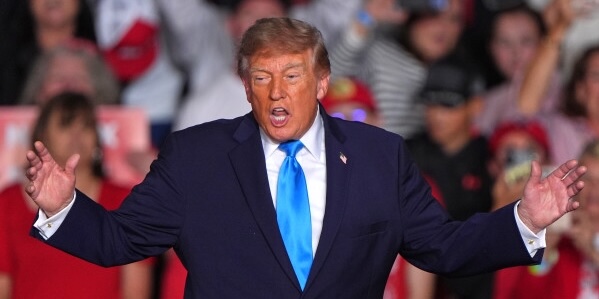

Ahead of the midterms, the federal government has engaged in what experts have described as an overreach of power in an effort to potentially undermine the results of a crucial election that will determine which party is in power in both chambers of Congress.
President Donald Trump has ordered federal agents to monitor the polls and spread unsubstantiated claims of widespread voter fraud, laying the groundwork for potentially contesting races where Democrats are expected to win. He already tried to preemptively challenge the results of Alaska’s Senate race, where two candidates with the same name threaten to split the Republican vote.
“The Trump administration has been trying to muddy the waters by releasing executive orders...restricting mailing ballots or demanding that states provide certain things and voter information,” said Darius Kemp, the executive director of California Common Cause, an organization involved in voting rights advocacy.
“He’s tried to muddy the waters to confuse voters,” Kemp added.
His interference, an extraordinary step taken by the U.S. federal government regarding elections, comes during a time where Americans are experiencing a crisis of faith in the process. A recent Gallup Poll found that a majority of Americans — 51 percent — lack trust in the electoral system. In 2026, 61 percent of Democrats have faith in the integrity of U.S. elections compared to only 37 percent of Republicans and 35 percent of independents.
“I think there’s concern that there has been an erosion of trust in our election system, and I think it’s something that, quite frankly, you’ve seen on both sides of the political aisle,” said Brian Jones, an advisor to the Democracy Defense Foundation, an organization founded in 2024 that works to increase trust in the American electoral system.
Federal law enforcement interference
Trump has mobilized multiple federal law enforcement agencies in the past year to create uncertainty around the election process for communities across the United States, multiple voting rights and civil liberties organizations have said.
Trump administration officials, including the president, have implied that they would send Immigration and Customs Enforcement (ICE) agents to polling sites this election as part of an attempt to prevent non-citizens from casting ballots, an issue that experts say is not widespread.
The Trump administration has also expanded its Department of Justice (DOJ) election monitoring program. This year, over 1,000 DOJ agents will spread to polling sites across the country, including in Democratic strongholds and in areas where Democrats are challenging incumbent Republicans. These monitors include people from federal agencies that aren’t the FBI or ICE, such as the Drug Enforcement Administration.
Armed federal agents at polling locations is illegal under U.S. law, the Brennan Center for Justice and other organizations have said.
“Sending armed federal agents, including those from ICE, to election sites is illegal,” Hayne Yoon, senior counsel in the Brennan Center’s Voting Rights and Elections Program, wrote. “Federal law and many states’ laws prohibit not only armed federal agents at polling sites, but also interference in elections or voter intimidation by any officials or private citizens.”
In Ohio, Federal Bureau of Investigations (FBI) agents in June raided the offices of the Ohio Organizing Collaborative, a group that helps register voters across the state. The agents also showed up at the homes of multiple organizers, allegedly asking them if they had committed voter fraud.
“They had agents all across the state going to civil rights leaders’ and community leaders’ doors intimidating them, coming and demanding that they talk about literally anything they would ask,” Prentiss Haney, a board member of the Ohio Organizing Collective, told MS NOW. Haney called the actions “straight up intimidation tactics,” made even more notable since they took place in a crucial swing state.
Voter fraud allegations
Claims of voter fraud in U.S. elections, particularly through non-citizen voting, have been perpetuated by the president and other administration officials frequently in the past year. The president has said voter fraud is “rampant,” a statement that does not align with actual research on the subject.
The Trump administration has demanded rolls with information about registered voters from every state, to various degrees of success. Using this information, the federal government compiled a database of voters and claimed that they found at least 300,000 non-citizens registered to vote in the United States.
In at least five states, the administration has asked election officials to remove these voters from registration lists. In California, the federal government asked for 20,000 people to be removed from voter rolls and in Washington, it asked for 400 people to be removed.
Courts have largely blocked these orders, in part because the federal government’s database has flagged multiple citizens as non-citizen voters, threatening to disenfranchise eligible Americans from casting ballots.
Trump has also tried to move to increase restrictions around mail-in ballots. He signed a March executive order trying to order the United States Postal Service to only mail ballots for voters listed in the administration’s federal database of eligible voters. The Supreme Court temporarily blocked this order, stating the issue would be revisited after the midterm elections.
In its latest move that was also blocked by a court, the administration tried to pre-emptively invalidate the results of the Alaska Senate race, where Democratic candidate Mary Peltola is slightly favored to win amid confusion about two Republican candidates named Dan Sullivan, which reports say Peltola’s team may have played a role in stoking.
Elections are a “local process”
To restore Americans’ faith in the electoral system, Jones and other voting rights activists have emphasized to communities that elections — despite threats of federal interference — are carried out by local organizations and individuals.
“One of the things we've seen over and over again is that when people equate elections to their local communities, they have a lot of faith in the elections because these are local people who are working on the elections,” Jones told The Caucus. “It’s really [about] trying to emphasize that your elections, even if it’s a federal race, these are local elections. It’s people in your community who are helping to facilitate and conduct the election.”
Local election officials and polling site volunteers are key players in ensuring early voting, Election Day, and subsequent ballot counting goes smoothly. Jones noted that these officials and volunteers often are invested in ensuring everyone has the chance to vote.
Organizations like California Common Cause also continue to educate voters on their rights and how to cast ballots, a mission that’s especially important amid proposed and enacted changes to election rules. “People need to be consistently and constantly re-educated and educated on what their rights are, what is available, how voting works,” Kemp said.
“People need to trust the elections and understand that the process works, and again, that it’s a local process,” Jones added.