How A Republican Stronghold in North Carolina Turned Into a Toss-Up
Farmer Jamie Ager could pick up a House seat for Democrats in the Tar Heel State’s conservative, rural counties
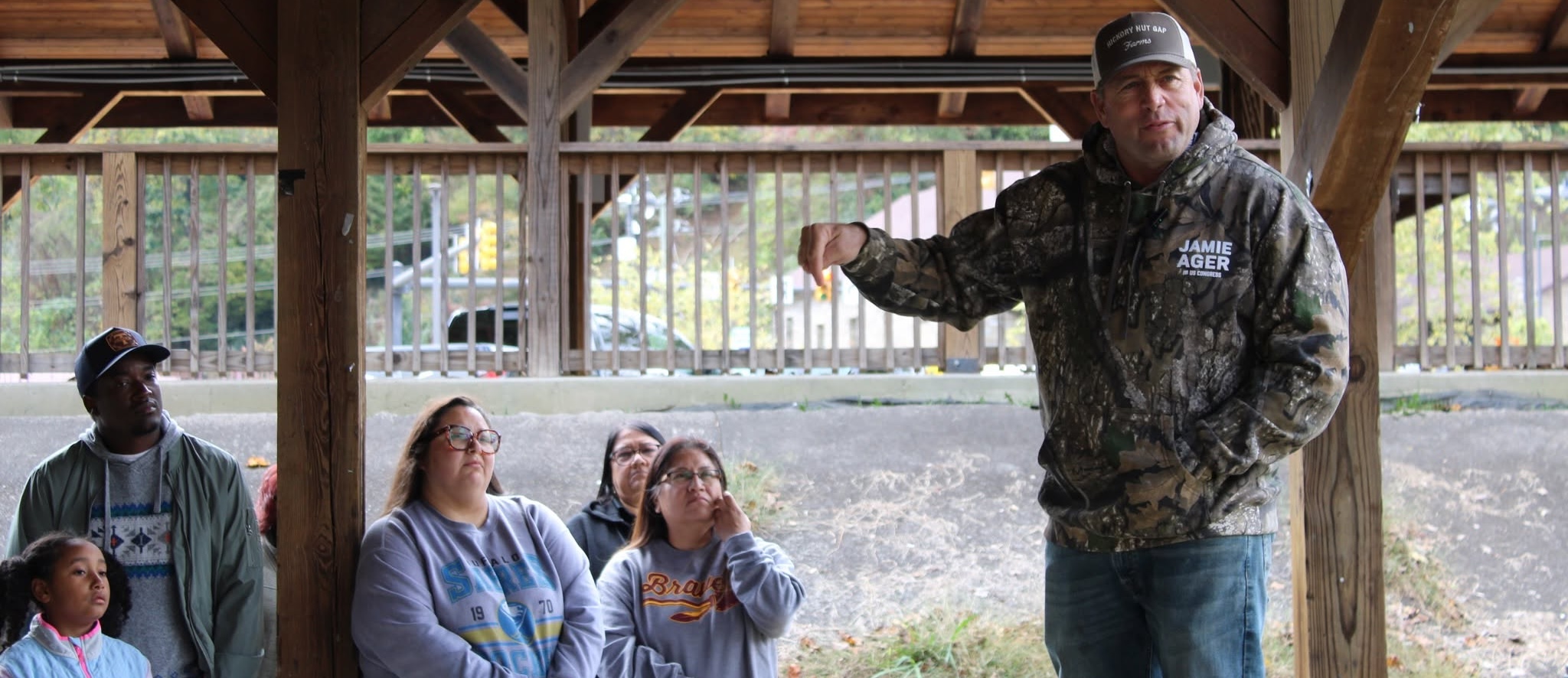

As President Donald Trump’s pressure campaign on Republican-led states to redistrict grew in intensity, North Carolina GOP legislators moved last fall to give the administration what it wanted.
The Tar Heel State’s House and Senate passed a new Congressional map along party lines that redrew districts to favor Republicans, undercutting one of four Democrat-held House seats in a state where Democratic power had been on the decline.
Republicans’ redistricting push left the boundaries of North Carolina’s 11th Congressional district, located in the state’s western corner, untouched. The district, which spans over 6,200 miles and is overwhelmingly white and conservative, hasn’t elected a Democrat since a GOP-controlled legislature redrew it in 2011.
To Republican legislators, it seemed like a safe seat. “It seems like they made a mistake,” said Steven Greene, a professor of political science at North Carolina State University.
Jamie Ager announced his run for Congress in August 2025 following what had been a few hard years for him. Hurricane Helene did a number on his farm and other areas of western North Carolina in fall 2024. He was still rebuilding when he lost a beef contract with local schools as a result of the Trump administration’s cuts to the U.S. Department of Agriculture. His background as a fourth-generation farmer has resonated across his district. During the Democratic primaries, he secured almost 65 percent of the vote.
“He is a great combination of a very good candidate running a very good race,” said Christina Reynolds, a Democratic consultant and adjunct professor in political communications at University of North Carolina-Chapel Hill. It’s a big part of why she believes Ager will triumph over Rep. Jennifer Balkcom this November.
Ager and Balkcom’s campaigns did not respond to requests for comment.
NC-11’s shift to the left
While most political ratings outlets only started to consider Ager’s candidacy as competitive after incumbent Rep. Chuck Edwards dropped out of the race, the Democratic Congressional Campaign Committee (DCCC) considered NC-11 a possible pick up much earlier.
In February, the Democratic Party’s House campaign arm added Ager to the first round of its Red-to-Blue program, which helps Democratic candidates in Republican-held districts flip House seats. DCCC chair Suzan DelBane characterized Ager as a “hometown fighter,” but his appeal as a candidate wasn’t the only factor that drew the organization to the district.
During the 2024 elections, when a majority of the nation moved toward the right, nine counties in North Carolina’s 11th Congressional District moved leftward. According to the DCCC, only five other Congressional districts across the nation swung as hard toward Democrats that election cycle.
Reynolds added that the DCCC’s decision may have also been influenced by what they saw as the vulnerability of Edwards. He dropped his re-election bid in August after a House Ethics Committee investigation found he had engaged in inappropriate conduct with female staff members.
Even before then, he was a “flawed candidate,” Reynolds said. The lack of enthusiasm for Edwards, the Republican incumbent, has been a part of what has made North Carolina’s 11th Congressional District competitive this election cycle.
While dissatisfaction with Edwards may have elevated Ager’s campaign, both Greene and Reynolds said that Ager himself — his experiences and campaign messaging — has been what’s made the NC-11 race one to watch this cycle. Greene credits Ager’s success to his focus on “North Carolina-specific politics,” his emphasis on his identity as a local farmer and businessman, and his commitment to presenting himself as “an independent voice” — someone who is a Democrat, yes, but is focused on representing his entire district, including Republicans.
“He’s doing exactly what you would advise a candidate to do to win in a district that favors the other party,” Greene said.
His understanding of the district and the challenges that residents face has shaped his campaign, Reynolds said. One notable way he has integrated district-specific challenges into his platform has been through his campaign promise to help with Hurricane Helene rebuilding efforts.
“One thing we shouldn’t underestimate is the impact of Helene and what it meant for people in the district,” Reynolds said. Frustration over slow funding and government support in the aftermath of a storm that caused over 250 deaths and over $78 billion in damages has built in western North Carolina.
“People want change,” Reynolds said. For some, Ager represents that.
Looking ahead
Ager, as a candidate, has worked to energize his electorate at campaign events and rallies. Almost 3,000 gathered to support him at a concert rally in Asheville Yards, North Carolina last week — a strong showing in the weeks before the November election.
Greene believes that Ager’s chances will boil down to dissatisfaction with the current administration keeping Republicans at home, a worry that GOP party leaders have expressed as well. The number of Republican voters that refuse to cast a ballot could be the margin between a win or a loss for Ager, Greene said.
Edwards’ late drop out could also affect the race’s outcome. Balkcom, who replaced Edwards as the race’s Republican candidate in August, will have had around three months to campaign before voters go to the polls on Nov. 3. Ager, meanwhile, has had 18.
Yet her entrance into the race in a way represents a “clean slate” for the Republican party, Reynolds said. “Given Edwards’ negatives and the various controversies around Edwards, that’s probably a net positive for the Republicans.”
But she isn’t as adept at campaigning as Ager’s has been, Reynolds noted. If she wins, it will be because of the partisan nature of the district, but if Ager wins, it will be because he ran a great campaign.